
Why
I felt like I had a poor eating December, probably like most of the world that celebrates Christmas and other December festivals. I had had too much sweet stuff and not enough fruit and vegetables! Then I went for a long run (solo mid-winter Bob Graham, my blog about this is available if you want to read it- also on this website) and ate even more sweet stuff in the guise of running food! While I was in recovery from my long run, I felt sluggish and tired and wondered how being sugar- free would affect it. I also a bit achy, likely from the run, but I wondered if being sugar-free would affect my recover by reducing inflammation. One recommendation for weight loss and healthier living is to stop eating sugar for a month (Zoe Podcast with Dr Andrew Jenkinson, 2025) so it felt like a health start to the new year.
What
I decided to continue to eat fruit. I can’t imagine a day where I don’t eat fruit and believe that the ‘other’ good stuff in fruit is inherently good for us: by this, I mean the fibre, vitamins and other nutrients. 95% of adults in the UK do not eat enough fibre, so reducing the amount I eat by stopping eating fruit, felt wrong (The Association of UK Dieticians). One reason for reducing sugar is to improve our gut microbiome: these are very important organisms helps us to keep inflammation under control and keeps us healthier (there are a number of podcasts on this, I like the Zoe ones as they tend to focus on the science, there is a link to one below if you wanted to look).
Who
I decided to give sugar free a try for a month to see what happened! If nothing else as least my teeth would thank me, I thought! My husband thought about it too, but decided to give up alcohol instead, which was a support, if not directly! :)
How
Well, this was both harder and easier than I initially thought. The idea of it is very off putting, I like cake, I like treats: when I run I like to eat sweets sometimes in the guise of ‘running food’ and we have a whole drawer at home full of ‘running food’ which contains a high proportion of sweets, treats and snacks that are not recommended by any running nutritionists! This drawer is not accessed exclusively for running either! :) So I knew stepping away from this would be hard. However, although I was on occasion tempted by the ‘drawer’, it was nowhere near as intense or as tempting as I initially thought. Fuelling my running was a different challenge! As I was in recovery from my Bob Graham round, I wasn’t doing a lot of long runs, the ones I did do I fuelled on nuts and fruit, drinking water instead of running drinks. I didn’t meet my target of 60g of carbohydrate per hour, nowhere near, but I did stick to my sugar free January.
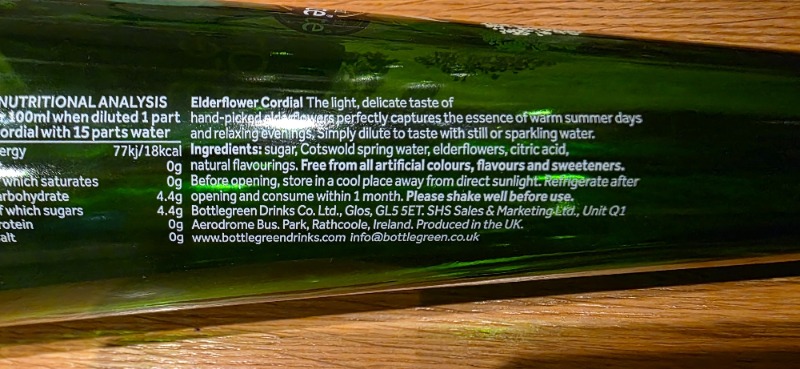
One hard part of sugar free January was reading the packaging on every item that one eats. While most of my meals are home cooked, there are some very sneaky additions to virtually every processed food! Some of this is labelled ‘sugar’ some fructose, some glucose. And there is lots, even in saviour foods. My take home from this is to read the packaging more.
My baseline diet looks something like this:
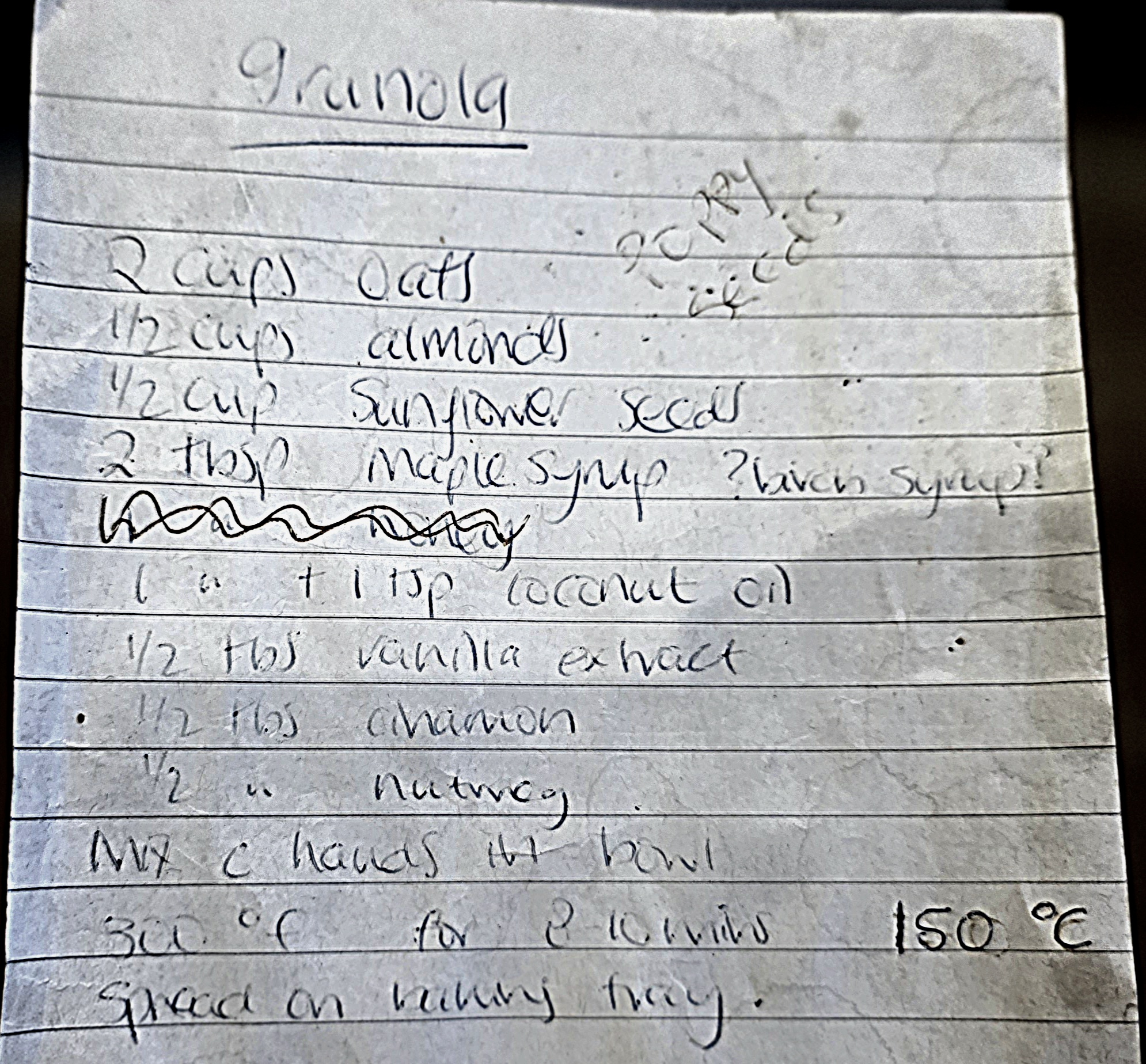
Breakfast is fruit, Weetabix, homemade granola (recipe below, I batch cook it and it lasts approx. 2 weeks), kefir yogurt and semi-skimmed milk.
Lunch is leftovers from our evening meals served usually with some salad and some kimchi.
Evening meals generally home cooked by my lovely husband who likes to cook (surely the best pulling point any running or foodie could dream about!). We are generally vegetarian at home, often vegan, but he eats meat outside of the house. Our protein sources are usually beans, lentils, with some Quorn and shellfish thrown in and probably too much cheese. I like vegetables, lots of them! So all our meals contain plenty: if a recipe doesn’t come with much in, we just adjust it to add lots.
Some of the changes to my usual diet were avoiding the pack of crisps I was having too frequently with my lunch (some of them have sugar in them, why? In salt and vinegar crisps!), I stopped eating deserts except for fruit and sugar free yogurt. They don’t sound like big changes, but ensuring I had fruit and yogurt in the fridge and available when I wanted it helped to avoid cravings and kept me away from temptation.
WHERE
This covered every area of my life. The two areas that were particularly hard were snacking and running.
WHEN
You know that month of January, the longest month of the whole year?
Some expected and unexpected outcomes
I’ve increased my knowledge about food ingredients and sugar in general. Stopping sugar for the long term feels like a sensible, if very restrictive diet to me and I’m not sure if I would maintain this forever, however, this month has made me rethink my sugar intake, and I have some work to do on this around running food intake. I think we have pretty much all realised that crash dieting and over restriction are not just impossible to keep to, but not healthy for our bodies, so imposing a sugar free diet is not what I will be doing, however, overall sugar free Jan was an excellence tool for thinking about nutrition and on what I am eating. I felt better at the start of February, in comparison to the start of January. It is likely that having a month of more gentle running training than what I am used it, will have contributed to this, as will the time that helped my recovery from my Bob, but I feel sugar free January also contributed to it.
My aim in doing sugar free Jan were very much around improving my overall health and improving my knowledge about how nutrition works for me. I did monitor my weight regularly throughout it, which is an unusual thing for me (I often go months without weighing myself and don’t worry about this as long as my clothes feel like they still fit me and I’m running well). I did wonder if I would lose any/much, although this was not the aim. I, of course, don’t think being healthy and being lighter are necessarily the same thing! I am very conscious about the number of runners struggling with symptoms of RED-S (Relative Energy Deficiency in Sport, here’s an article about it: https://www.runnersworld.com/uk/health/a33589189/red-s-relative-energy-deficiency-running/ ). And I am very aware about my bone health after having a stress fracture in 2019, related mainly to over training.
Over sugar free January I lost 2 kilograms (4.4Ibs), some of which might have been fluid shifts after running the Bob so near to starting sugar free Jan (often post-ultra’s I retain some fluid around my ankles, in particular, while my electrolytes and hormones settle after the stimulation of running all night and staying awake). But I cannot recall that I have ever lost weight in this was after a 24 hours challenge. Perhaps the weight loss says more about the amount of sugar I was eating!
Hopefully another improvement will be in my gut microbiome. These important organisms help defend us from inflammatory problems and an unhealthy microbiome is increasingly associated with many chronic illnesses like diabetes and coronary heart disease.
What does the future look like?
At one point in the first few weeks, I thought that the first week in February would be like Easter Sunday of my youth, chocolate, chocolate and some more chocolate! I did eat some chocolate on Feb 1st, but nowhere near as much as I thought I would! It’s mid Feb now, and although I am eating some sugar here and there (Thanks Valerie for the amazing cheesecake last Sunday, which definitely wasn’t sugar free!), I am eating much, much less that I was prior to January, so it’s been good learning for me to think about what I’m putting my in mouth and what it means to my digestive system and body in general. The number and amount hidden sugars in ‘savoury’ foods was a real eyeopener. My snacking consistently contained a greater proportion of nuts and fruit than prior to January, a habit I’m hoping to continue.
Going forward into February, I certainly don’t feel sluggish, I’m not tired and I feel ready for a big training block, full of the heady mixture of hard intervals and long runs out in the Lake District fells as Spring casts her spell upon us, the plants start to grow the days get longer and the birds start to sing again. I’ve starting thinking about challenges for 2026.
References:
Zoe Podcast Dr Andrew Jenkinson 9 Oct 2025
The Association of UK Dietitians (accessed on 04Mar2026) https://www.bda.uk.com/resource/fibre.html